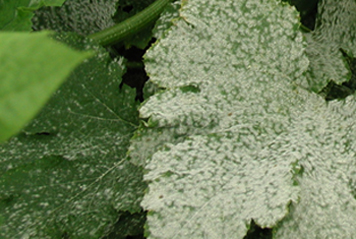


Despite the great efforts invested by seed and agrochemicals companies, diseases caused by phytopathogenic fungi such as cucurbit powdery mildew (Podosphaera xanthii) or botrytis (Botrytis cinerea), continue to be a major threat to horticultural production throughout world level.
The use of fungicides is essential to control both diseases; however, these synthetic agrochemicals are under pressure due to the rapid emergence of resistance by these pathogens. Considering that the diversity of fungicides available to growers will be increasingly restricted, not only by the current European legislation on pesticides but also by the European Green Pact, it is essential to develop new crop protection tools that are compatible with an increasingly sustainable agricultural environment. Our research line aims to provide solutions for the control of both diseases by identifying new targets, essential proteins for the development and/or pathogenicity of these fungi, and the design of new molecules with fungicidal action such as antifungals and polynucleotides.
To do this, from genomic and transcriptomic information, and using protein modeling and gene silencing techniques, we identify potential targets. The design of new antifungal compounds inhibitors and fungicidal oligonucleotides (dsRNAs and aptamers) are being carried out by virtual screening of chemical libraries using topological descriptors and suppressing the gene expression or the direct blocking of the selected targets, respectively. In this way, we hope to be able to lay the foundations for the development of new phytosanitary products and increase the number of tools available for the integrated control of these and other diseases of fungal origin.